Hallway Between Years
Key art
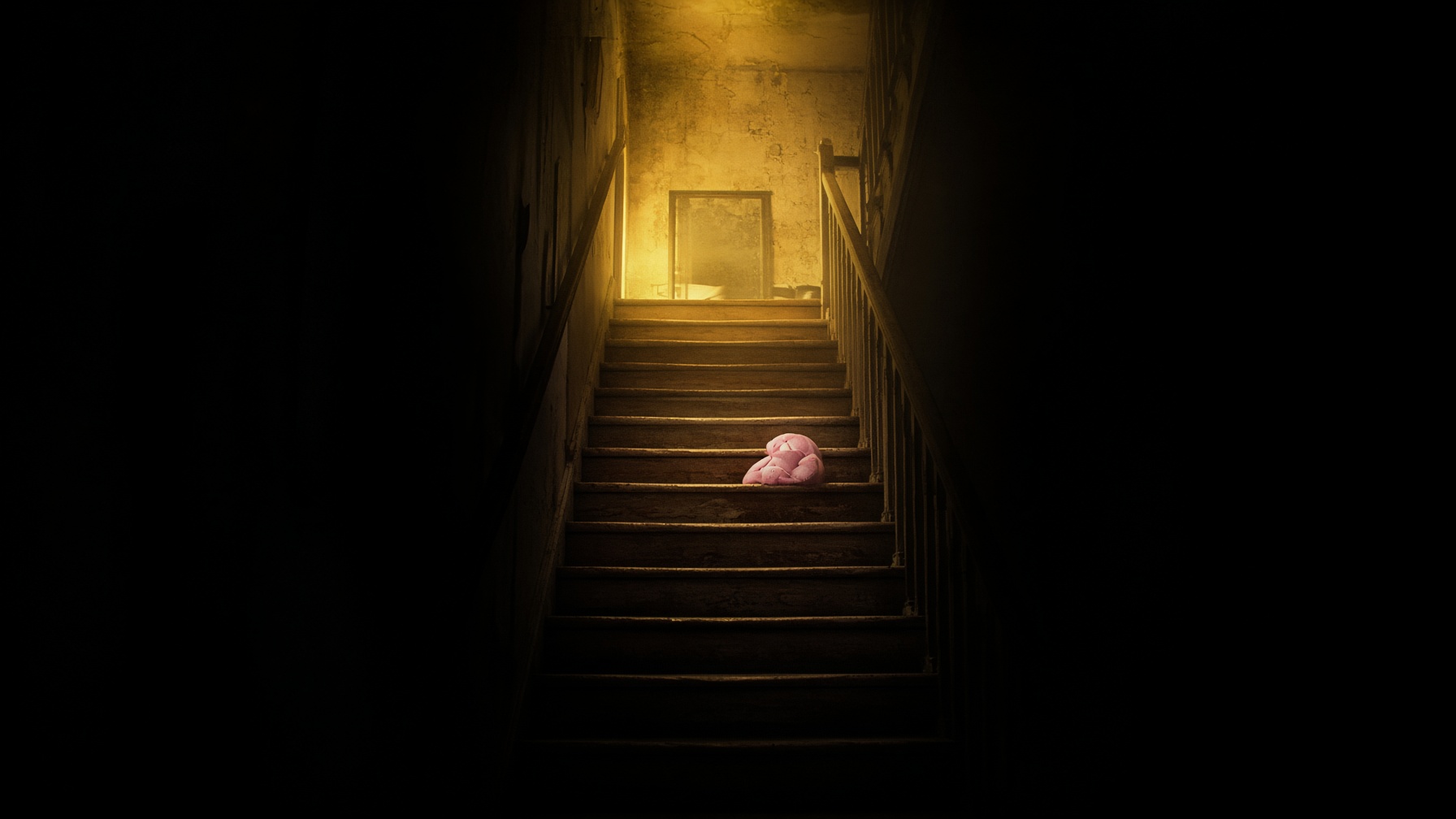
The screening
The picture is filed as Hallway Between Years.
Scenario
2:57 · 16:9
A corridor that ought to join two rooms runs longer than the plan on the wall. The plan is pinned under glass and shows a short run of boards. The boards underfoot go on. Light changes along it. Near the first door the air is late summer, warm on the paint, a fly moving slow against the upper wall. Ten paces on, the same wall cools, and frost feathers the glass of a door numbered with a familiar brass 4. Behind that glass, rain falls in a season the hallway's near end does not share. The rain beads and runs and beads again. The runner underfoot stays dry.
A man walks in shoes that announce him. Under those steps, a second set of footsteps keeps a different rhythm, lighter, from a year his body is not in. He stops. His own shoes go quiet. The other steps continue and pass him without a body attached. The runner dents and lifts where no heel shows. On a hook between the seasons hangs a coat sized for a narrower pair of shoulders, a coat he has outgrown or not yet earned. Dust lies along the collar. He takes it down and tries one sleeve. The cuff stops midway up his forearm. The cloth does not stretch. He returns it to the hook. The empty sleeve swings once and hangs straight, and the cuff he pulled closes back to its smaller size.
He tries the door marked 4. The handle is cold. It sticks, then gives. Rain blows in, though the floor under him is dry and warm. Drops land on the threshold and do not travel onto the warm boards. He shuts the door. Frost, disturbed, feathers a little farther along the glass and then stops, a new white edge that does not reach the brass number. At the far end another door shows the same number, and green leaves press against its glass. The leaves shift as if in a breeze this hallway does not have. He does not open it. His hand stays at his side. The foreign footsteps come back down the runner and fade at his heels. One last lighter step sounds under his own shoe and is gone.
The small coat hangs straight. The plan on the wall has not lengthened to match the walk. Summer stays at one end of the passage, warm paint and the slow fly, and winter stays at the other, rain behind cold glass, with him standing in the length that joins them and neither door opening again.
He stays where the seasons meet. The warm end of the passage does not creep toward the frost, and the frost does not creep back toward the fly. The plan under its glass shows the short corridor it was drawn to show. His breath fogs once on the nearer air and not at all on the far glass. The small coat's collar keeps its dust. The second rhythm does not return. Rain behind the brass number keeps its own season, and the green leaves at the far door keep theirs, pressed to glass he does not open.
Shooting script
Scene 1. Hallway. Day. 2:57. 16:9.
One place. One hour. It stays one scene.
A man walks a corridor longer than its plan, tries a too-small coat, and shuts a rain door marked with a brass 4.
No dialogue.
Breakdown
Day hour. A hallway of two seasons, and a coat too small.
Cast. One man, thirty-three. Footsteps of a second rhythm with no body attached. No other person appears.
Hall and plan. A corridor whose boards run longer than the plan pinned under glass. The plan shows a short run and must stay short. A runner that dents and lifts where no heel shows, and stays dry.
Two doors. A near door with a familiar brass 4, frost on the glass, rain behind it in another season. A far door with the same number and green leaves pressed to the glass. The near handle is cold, sticks, then gives. Drops land on the threshold and stay off the warm boards.
Small coat. A coat on a hook, sized for narrower shoulders, dust along the collar. The cuff reaches only halfway along his forearm, then eases back to that smaller size after he hangs it up.
Near season. Late-summer air at the first end, warm paint, one slow fly on the upper wall. His breath can fog once in the nearer air and leave the far glass clear.
Far season. Winter at the brass-4 glass: rain beading and running. Frost that feathers a little farther when the door is shut, a new white edge that stops short of the number.
Shot list
Camera. One scene. 16:9.
Nobody looks into the lens. The sizes below are the decoupage, not the literary script.
1 · 0:00–0:16 · Wide. A corridor runs longer than the short plan pinned under glass on the wall.
2 · 0:16–0:28 · Medium. Near the first door the paint is warm, and a fly moves slowly on the upper wall.
3 · 0:28–0:38 · Close. Ten paces on, frost feathers the glass of a door with a brass 4, rain behind it.
4 · 0:38–0:49 · Macro. The runner underfoot stays dry while drops bead and run on the far side of that glass.
5 · 0:49–1:01 · Medium. A man walks in; under his shoes a lighter rhythm continues with no body on it.
6 · 1:01–1:11 · Close. He stops; his shoes go quiet; the runner dips and rises with no heel in sight.
7 · 1:11–1:23 · Medium. A small coat hangs on a hook between the seasons, dust along the collar.
8 · 1:23–1:34 · Macro. He tries one sleeve; the sleeve halts halfway along his forearm and holds its size.
9 · 1:34–1:44 · Close. He hangs the coat back; the empty sleeve swings once, and the cuff closes to its smaller size.
10 · 1:44–1:56 · Medium. He tries the brass-4 door; the cold handle sticks, then gives, and rain blows onto the threshold only.
11 · 1:56–2:07 · Close. He shuts the door; frost feathers a new white edge and stops short of the number.
12 · 2:07–2:19 · Wide. At the far end another door shows the same number, green leaves pressed to its glass.
13 · 2:19–2:29 · Medium. His hand hangs beside his thigh while the lighter steps return along the runner and fade at his heels.
14 · 2:29–2:43 · Close. One last light step sounds under his own shoe and is gone; breath fogs once in the near air.
15 · 2:43–2:57 · Wide. Summer stays at one end, winter at the other, the small coat straight on its hook.
Lookbook
Warm paint beside cold frost.
Light changes along the corridor instead of coming from one window. At the near end it is late-summer warmth on the paint. At the brass 4 it is cold and grey, and frost on the glass takes that cold as a white feather. The small coat on the hook sits in the seam between those lights, dust on the collar reading pale against darker cloth. Rain behind the glass shines and never reaches the dry runner.
Palette
Warm paint. #C4A36A. The late-summer end of the passage
Frost. #E4EEF2. Feathered white on the brass-4 glass
Rain glass. #6E8B98. The wet season behind the door
Runner. #7A4032. The dry carpet underfoot
Brass number. #B08A3E. The 4 on both doors
Small coat. #4E5A66. The narrow coat on the hook
Collar dust. #C8BEAE. Dust along the coat collar
Leaf green. #3F6A3A. Leaves pressed to the far door
Lens
Wide holds the full corridor, both numbered doors, and the plan under glass. Medium holds the man between the warm end and the frost. Close and macro hold the too-small cuff, the frost edge, the dry runner, and the brass 4.
Costume
A coat he can no longer wear.
The man is thirty-three. He wears ordinary day shoes that sound on the runner, and a jacket that fits the shoulders he has now. That jacket stays on. The story's garment is the other one.
The coat on the hook is cut for a narrower pair of shoulders, cloth that stops halfway up his forearm. Dust sits on the collar. He tries one sleeve, the cloth holds its size, and he returns it. The empty sleeve swings once and hangs straight. The cuff he pulled closes back to the smaller measure. Summer cloth and winter air meet on him only as weather, not as a second costume.
Design
A corridor longer than the plan on its wall.
The hallway has to run past the short plan pinned under glass. Near the first door: warm paint and a slow fly. Farther on: a door with a brass 4, frost on the glass, rain behind it. The runner stays dry even when the door opens and drops land on the threshold.
A hook between the seasons holds the small coat, dusty at the collar, cuff able to stop on a grown forearm and then relax to its first size. At the far end a second door carries the same number, with green leaves on the glass. Frost must be able to creep a little after the near door shuts, and stop before the brass. His breath fogs the near air once and leaves the far glass clear.
Makeup and hair
Dust on a collar, frost on a handle.
The man is thirty-three. Hair is short and ordinary. Skin at the near end is warm; at the brass door his hand takes the cold handle, so the fingers read chilled for that beat and then hang at his side again. No mark is left on the palm.
The small coat's collar carries dust, which is the only powder in the scene. It stays on the cloth, not on his face. The lighter footsteps have no body, so they have no hair and no skin to prepare.
Sound
No score. Two rhythms of steps, rain behind glass, a cold hinge.
His shoes. A clear adult step on the runner. They stop when he stops, and stay quiet.
Other steps. A lighter rhythm under his, from no visible heel. It passes him, later returns, and ends as one last tap under his own shoe.
Rain door. Rain beads and runs behind the brass-4 glass. When the door opens, drops hit the threshold and travel no farther. He shuts it.
Handle. A cold handle sticks, then gives. The shut brings a small change in the frost, audible only as the door's seal.
Coat hook. Cloth off the hook, a cuff that fails to give, then one swing of the empty sleeve as it hangs straight.
Fly. A slow insect tick against the warm upper wall at the summer end. It stays there.
Seasons hold. After the last light step, the near air is quiet and the far rain keeps its own closed-door sound.