Mist Walkers
Key art
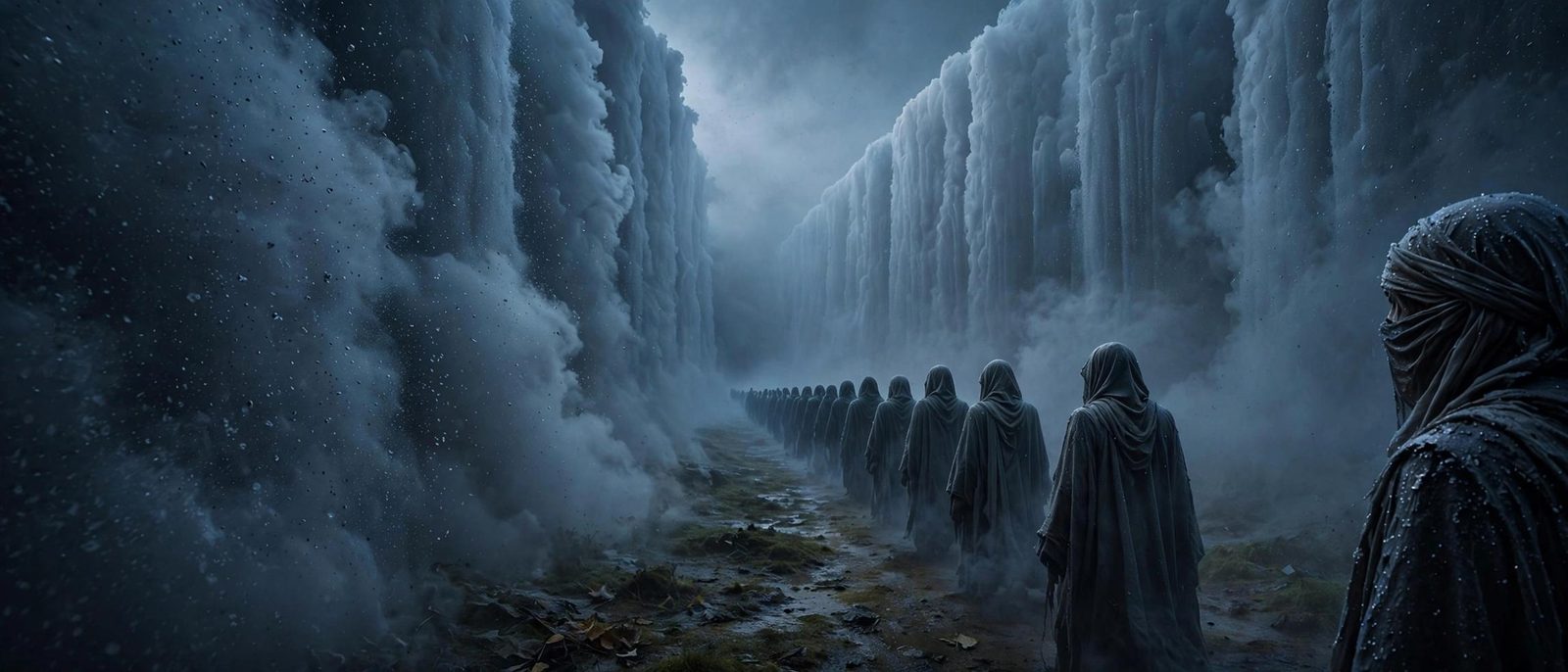
The screening
The picture is filed as Mist Walkers.
Scenario
2:57 · 16:9
A procession of hooded figures walks between ice-white walls, into mist. Their steps are even. The walls give way to a canyon of smoke, columns on either side, the procession small between them. The columns do not hold a roof. Smoke moves and the columns stay. Mud takes over from the stone underfoot. The change is a line, pale stone and then brown, and the hoods cross it without comment.
A bare foot meets the mud and finds a print already there, the same size, already filled with water. The water in the print does not ripple until the foot considers it. Three figures are ahead and do not turn. Their hoods stay aimed into the fog. The foot steps into the old print anyway. Water climbs the ankle and falls back into the same shape. Farther on, the procession passes a carved stone hall. An eye is carved into the wall. The hoods pass it. The eye does not move. It does not blink. Water from the mud does not reach the carving.
One hooded figure looks back. The hood's angle changes. The others continue into the fog and become three shapes, then two, then mist. The one who looked back stops. Mud holds the stopped foot. The bare foot, muddy now, stays in the print that was waiting. The print and the foot are the same size and do not become a new size. Ahead, the last hood thins and does not return as a person.
The carved eye remains on the wall. It does not follow the one who stopped. The ice-white passage behind the procession is empty. No second procession comes out of it. Ahead, the mist keeps the hoods that do not turn. The one who stopped stays in the mud, hood still angled back toward the passage, one bare foot set in the older print. Water in that print settles around the ankle and does not drain. The columns of smoke stand where they stood. The eye stays carved. The mist does not give the others back.
A drop falls from the hem of the stopped hood into the print and changes nothing about its size. The figure does not pull the foot free. The passage behind stays empty and white. The canyon ahead stays smoke. Between them one hood remains turned back, and the older print keeps the bare foot it was already shaped to keep.
Smoke between the columns thins and thickens and never becomes the hoods that went ahead. The carved eye gathers no water and no blink. Behind, the ice-white walls stay empty of a returning procession. The bare foot and the older print remain one shape. Mud does not climb higher than the ankle. The figure who looked back does not look forward again. The mist keeps what it took. The hall behind keeps nothing. One hood stays angled toward the white passage, and the print keeps the foot that agreed to fit it.
Shooting script
Scene 1. Ice-white hall. Day. 2:57. 16:9.
One place. One hour. It stays one scene.
Hooded figures walk from ice-white walls into mud and mist. One stops, bare foot set in an older print. The carved eye stays still.
No dialogue.
Breakdown
Day hour. Build white walls, smoke columns, mud, and a carved eye.
Cast. A hooded procession of adults. One adult, thirty-eight, looks back and stops with a bare foot. The others continue and thin into mist.
White walls. Ice-white walls for the start of the walk. The passage behind must be able to read empty.
Smoke canyon. Columns of smoke with no roof. Smoke moves. The columns stay.
Ground. A hard line from pale stone to brown mud. One older footprint already filled with water, the same size as the bare foot.
Carved eye. A stone hall wall with one carved eye. The eye stays still. Mud water stays off the carving.
Hoods. Hoods with hems that can drop one bead of water into the print.
Shot list
Camera. One scene. 16:9.
Nobody looks into the lens. The sizes below are the decoupage, not the literary script.
1 · 0:00–0:12 · Wide. Hooded figures walk between ice-white walls.
2 · 0:12–0:24 · Medium. Their steps stay even as the line enters mist.
3 · 0:24–0:36 · Wide. The walls give way to a canyon of smoke and standing columns.
4 · 0:36–0:48 · Close. Pale stone underfoot becomes brown mud on a hard line.
5 · 0:48–1:00 · Macro. A bare foot meets a water-filled print of the same size.
6 · 1:00–1:12 · Medium. Three hoods ahead stay aimed into the fog.
7 · 1:12–1:24 · Close. The foot steps into the print. Water climbs the ankle and falls back.
8 · 1:24–1:36 · Wide. The procession passes a carved stone hall.
9 · 1:36–1:48 · Macro. A carved eye stays still on the wall, dry of mud.
10 · 1:48–2:00 · Medium. One hood turns back. The others thin from three shapes to mist.
11 · 2:00–2:12 · Close. The stopped figure keeps the bare foot in the older print.
12 · 2:12–2:24 · Wide. The ice-white passage behind the line stays empty.
13 · 2:24–2:36 · Macro. A drop falls from the hood hem into the print.
14 · 2:36–2:48 · Medium. Smoke between the columns thins, then thickens again.
15 · 2:48–2:57 · Wide. One hood stays angled toward the white passage, foot still in the print.
Lookbook
Pale day inside white mist.
Day is pale and diffuse, caught in ice-white walls and then in mist. The smoke columns take the light and keep their shape. Mud reads brown only where the foot disturbs the water. The carved eye sits in a drier, harder light on the stone, with no water reaching it. The stopped hood is the darkest shape against the white passage behind.
Palette
Ice wall. #E7EEF2. The ice-white passage at the start
Mist. #C5D0D4. The fog that takes the hoods ahead
Smoke column. #8E979C. The standing columns of smoke
Pale stone. #D5D0C6. The stone underfoot before the mud line
Mud. #6B4A32. The brown ground and the stopped foot
Print water. #7E8E86. The water already in the older print
Carved stone. #B7B1A6. The hall wall around the eye
Hood cloth. #3A403C. The hoods, especially the one turned back
Lens
Wide holds the white walls, the smoke canyon, and the empty passage behind. Medium holds the procession and the one hood that turns. Close and macro hold the bare foot, the water in the print, the drop from the hem, and the carved eye.
Costume
Hoods for a wet walk.
The walkers are adults in long hooded coats of dull charcoal cloth. The hoods hide the hair and the faces. The hems are long enough to drip.
The one who stops is thirty-eight. That coat matches the others until the hood turns back. One foot is bare. The others may keep their feet covered. Only this ankle enters the water.
Mud and water climb that ankle and fall back into the print. A drop leaves the hem. The cloth of the hood stays angled toward the white passage. The coats ahead thin into mist and are gone from the ground.
Design
White walls into mud.
The ground has to change in one line: pale stone, then brown mud. The ice-white walls open into a canyon where smoke columns stand and move. No roof is built over them.
One older footprint, filled with water, has to match the bare foot. Water has to climb the ankle and settle back into the same shape. A single drop has to fall from a hem into that print.
A carved eye sits in a stone wall. It stays still, and mud water stays off it. The passage behind has to be able to read empty while mist hides the hoods ahead.
Makeup and hair
Mud sits on one ankle.
Faces stay inside the hoods. Hair stays covered. The visible skin is the bare foot and ankle of the adult who stops.
That person is thirty-eight. The foot is clean when it meets the print, then muddy. Water wets the ankle and settles. No cut is added to the skin.
The other walkers show only cloth. The carved eye is stone, not a face to paint.
Sound
No score. Steps, mud, and water.
Steps. Even steps on pale stone at the start of the walk.
Mud. The steps dull when the hoods cross the line onto mud.
Print. Water in the old print stays quiet, then moves when the bare foot enters.
Ankle. Water climbs and falls back with a small wet sound around the ankle.
Drop. One drop from the hem hits the print and stays a small sound.
Distance. The hoods ahead thin out of earshot. The stopped foot stays in the mud with the passage quiet behind.