The Boundary Stone
Key art
The screening
The picture is filed as The Boundary Stone.
Scenario
2:57 · 16:9
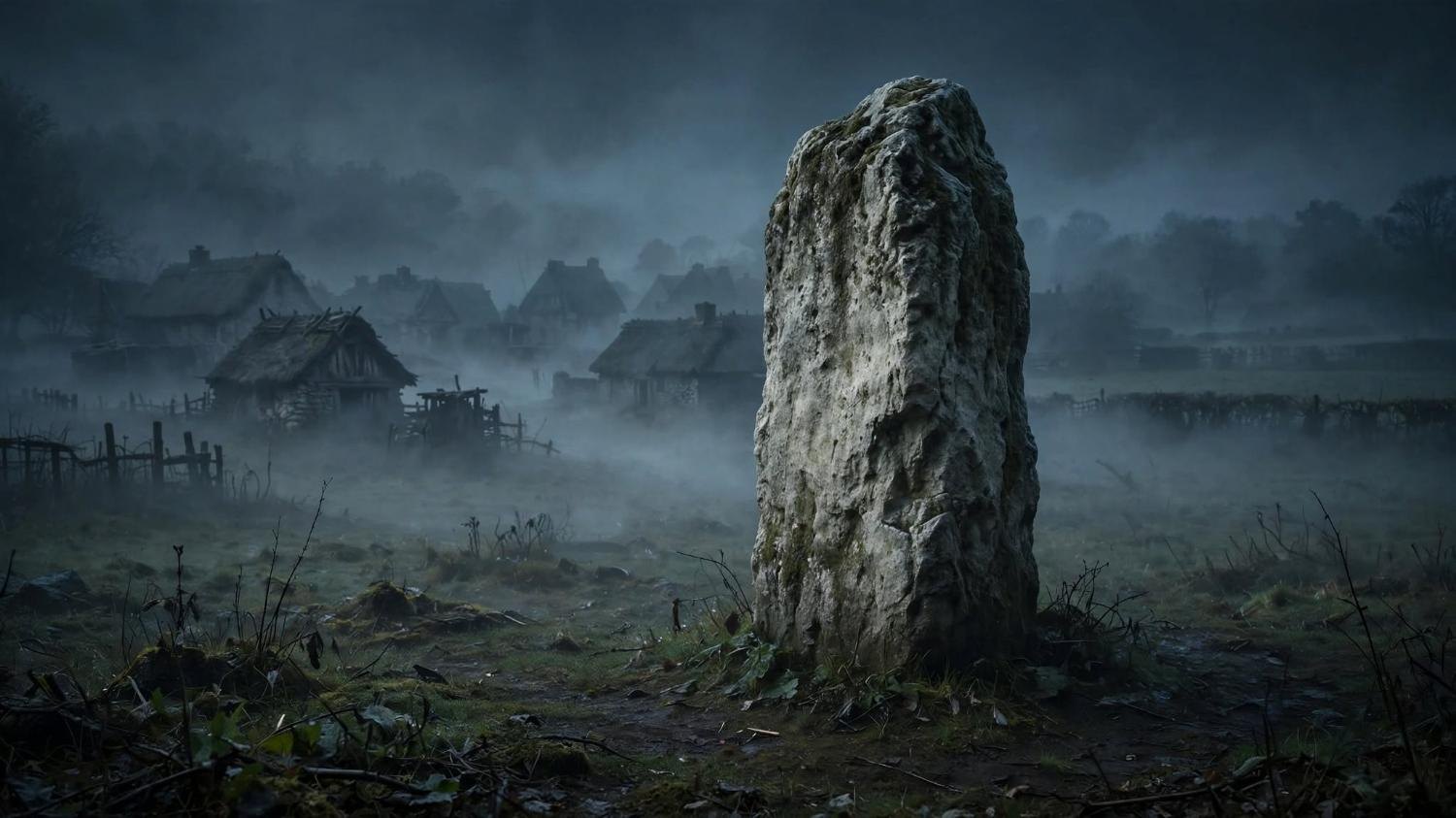
Fog stops clean at a standing stone beside a wet road, as if the village has an end the mist will honor. Beyond the stone the fields are clearer than the houses. Those houses are still dark, though the evening is long past the hour for lamps. Hooded figures keep to the carved face of the stone and do not pass it. A woman comes up the road carrying a cracked clock of blackened steel, one of a numbered set, its face split across the numerals. It is not a stone and does not pretend to be one.
Rain ticks on the road and beads on the standing stone. The figures' hoods drip. None of them looks past the carving toward the clearer fields for long. The woman stops on the outer side, the side the fog has already left. The clock in her hands is split from the twelve toward the six. Through the split she can see her own coat, divided. Minutes pass as the dark houses staying dark, and as the fog pressing the carved face and not crossing. She does not set the clock down yet. The figures do not step out to take it from her.
She sets the clock in the grass on the outer side of the boundary. The village windows light together, all too late for any ordinary lighting of rooms. Fog draws tight against the carving. The hooded figures turn their hoods toward the new lights and still do not cross the stone. The clock lies on its split. Rain begins to find the crack. One hand of the clock, visible through the break, jerks a single tick opposite the other hand, and both stop. The opposed tick follows the placing. It does not make the hour sensible. The lights in the houses do not go out to undo themselves.
She leaves the clock lying in the drier grass. Through its crack the road shows in two pieces. Rain darkens the standing stone. Behind it the houses burn small and late, and the figures remain at the carved edge. Fog does not thin to reward the lights. A hood turns back toward the stone's face and stays there. The clock's opposed hands do not reconcile.
The split clock keeps the road in two pieces. Late lights hold in the houses. The figures stay at the carving, and the fog keeps the boundary the stone already drew.
Rain finds the split in the clock and beads there without sealing it. The two pieces of road seen through the crack do not join when she blinks. Hoods drip onto the carved face of the stone and the carving does not soften. A window that lit late flickers once and steadies, still late, still small. No figure puts a foot into the clearer field. The woman keeps her hands at her sides now that the clock is out of them, and the grass under the steel darkens only where the rain, not a footprint, tells it to.
Shooting script
Scene 1. Village edge. Night. 2:57. 16:9.
One place. One hour. It stays one scene.
A woman of forty-two sets a cracked steel clock in the grass by the standing stone, hooded adults stay at the carved face, and the clock hands stop on opposed ticks.
No dialogue.
Breakdown
Night hour. A boundary stone and a split clock.
Cast. Woman, 42, on the outer side of the stone. Hooded adults at the carved face. No one crosses.
Stone. A standing stone with a carved face. Fog stops clean against it. Rain beads on it. The carving stays sharp.
Clock. A cracked clock of blackened steel, one of a numbered set, face split from the twelve toward the six. One hand jerks opposite the other, then both stop.
Road and grass. A wet road. Drier grass on the outer side where she sets the clock. Through the crack the road shows in two pieces.
Houses. Dark houses that light together, late and small. One window flickers once and steadies.
Fog. Fog pressed to the carved face, clearer fields beyond the stone, fog that stays tight after the lights come on.
Shot list
Camera. One scene. 16:9.
Nobody looks into the lens. The sizes below are the decoupage, not the literary script.
1 · 0:00–0:11 · Wide. At night, fog stops clean at a standing stone beside a wet road, with clearer fields beyond it.
2 · 0:11–0:22 · Medium. Hooded figures keep to the carved face, and the houses behind them are still dark.
3 · 0:22–0:34 · Medium. A woman comes up the road carrying a cracked clock of blackened steel, split from the twelve toward the six.
4 · 0:34–0:46 · Close. Through the split she can see her own coat divided, and she stops on the outer side.
5 · 0:46–0:58 · Wide. Rain ticks on the road and beads on the stone while the hoods drip.
6 · 0:58–1:10 · Medium. The cracked clock goes into the grass outside the stone.
7 · 1:10–1:22 · Wide. The village windows light together, all late, and fog draws tight against the carving.
8 · 1:22–1:34 · Macro. One hand of the clock jerks a single tick opposite the other, and both stop as rain finds the crack.
9 · 1:34–1:46 · Medium. The hooded figures turn their hoods toward the new lights and still stay on the stone's side.
10 · 1:46–1:58 · Close. Through the crack the road shows in two pieces.
11 · 1:58–2:10 · Wide. She leaves the clock lying there, the houses burn small and late, and the figures remain at the carved edge.
12 · 2:10–2:24 · Close. A hood turns back toward the stone's face, and the opposed hands stay apart.
13 · 2:24–2:40 · Macro. Rain beads in the split without sealing it, and the carving stays sharp.
14 · 2:40–2:57 · Wide. Her hands stay at her sides, the grass under the steel darkens from rain, and no foot enters the clearer field.
Lookbook
Night rain at the stone
Night on the village edge is wet and late. The standing stone takes the rain as a dark shine, and fog presses the carved face without crossing. Beyond it the fields are clearer than the houses. When the windows light, they are small and too late, a weak warmth behind the stone. The split clock lies in the outer grass and shows the road in two pieces through its crack.
Palette
Standing stone. #6B675F. Carved face where the fog stops.
Night road. #2A3036. Wet paving the woman walks.
Fog. #B7BFC6. Mist held at the carving.
Clear field. #4E6A52. Ground beyond the stone.
Steel clock. #3E4642. Blackened cracked case in the grass.
Late window. #E2C07A. Small lights that come on together.
Hood cloth. #1C2228. Hoods dripping at the stone.
Her coat. #4A4038. Coat seen whole and, through the split, divided.
Lens
Wide holds the stone, the road, the fog line, and the late houses. Close and macro hold the split clock, the opposed hands, and the crack. Medium holds the woman and the hooded figures at the carving.
Costume
A coat seen through a split
The woman is forty-two. She wears a plain coat and comes up the wet road with the clock in both hands. Through the split face the coat reads as divided, though the cloth itself stays whole. Once the clock is in the grass, her hands stay at her sides. Rain darkens the shoulders a little and changes nothing else.
The hooded adults keep dark hoods that drip onto the carved face. They turn the hoods toward the late lights and then one hood turns back to the stone. No one steps into the clearer field, and no one takes the clock from her. No extra villagers are added.
Design
A stone that stops the fog
The set is a village edge at night: a wet road, a standing stone with a carved face, fog that ends cleanly at the carving, clearer fields beyond, and dark houses whose windows can light together late. One window flickers once and steadies.
The clock is blackened steel, cracked from the twelve toward the six, able to show her coat and then the road in two pieces. One hand must jerk opposite the other and both must stop. Rain beads in the split and on the stone. The grass under the clock darkens from rain, not from a new footprint.
Makeup and hair
Rain on faces under hoods
The woman is forty-two, hair damp at the edge of the coat, face open to the rain, hands occupied by the clock and then empty. No paint beyond wet skin.
The hooded adults keep their faces inside the hoods. Rain runs the cloth, not a made-up tear. No one is cut, and no blood is added. The stone's carving is mineral, not a face to be made up.
Sound
No score. Rain, dripping hoods, and one clock tick.
Rain. Ticks on the road and a softer bead on the standing stone.
Hoods. Water dripping off the hoods onto the carving.
Steps. Her approach on the wet road, then a stop on the outer side.
Set down. The steel clock meets the grass with a short dull sound.
Opposed tick. One hand jerks a single tick against the other, and both stop.
Windows. No crowd noise when the lights come on. One window gives a tiny flicker and steadies.
After. Rain continues. No foot crosses into the clearer field.