The House That Remembers
Key art
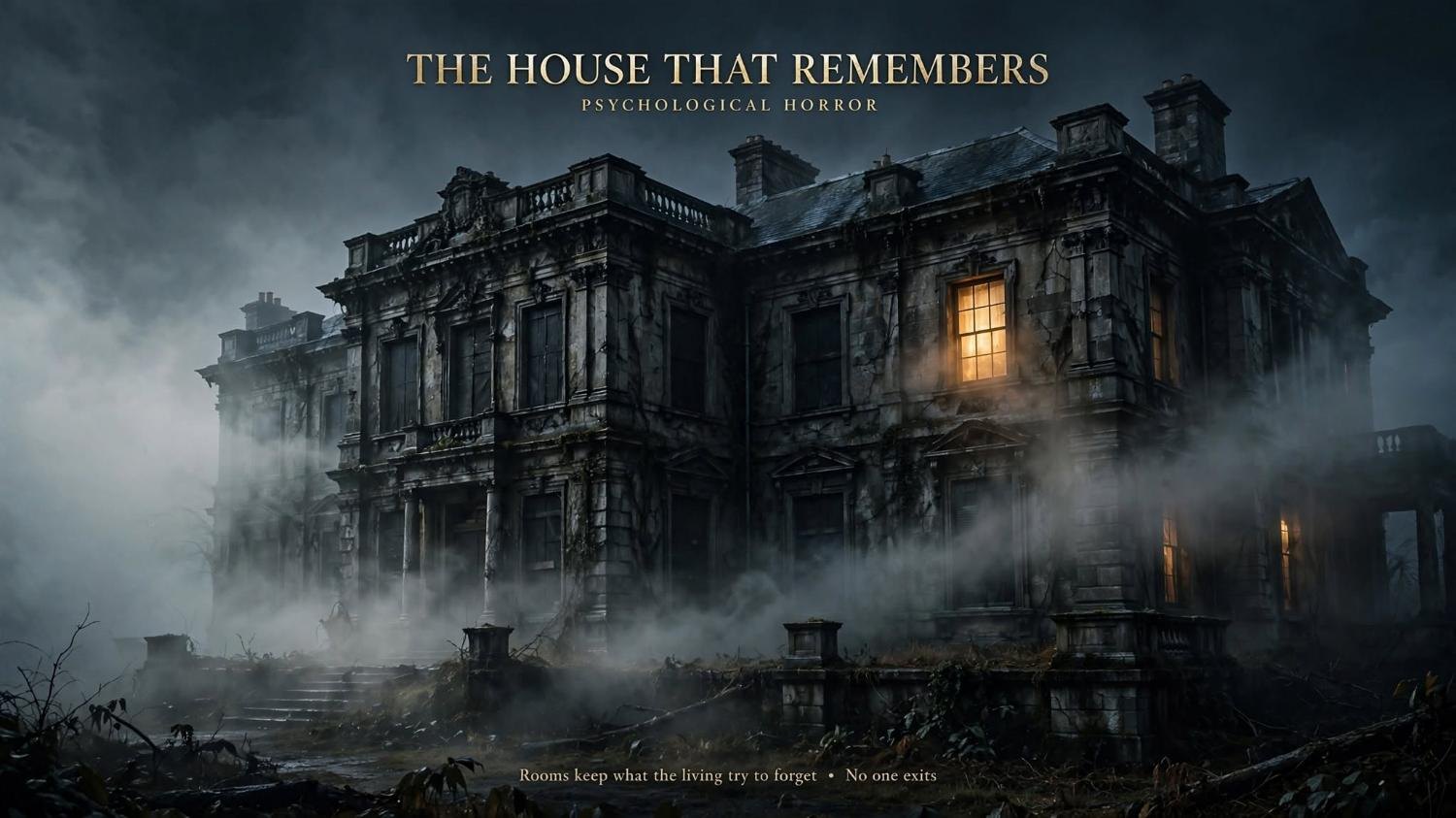
The screening
The picture is filed as The House That Remembers.
Scenario
2:57 · 16:9
A house small enough to stand in one pocket of dark holds every window black except one. That upper pane keeps a steady light the rest of the facade has not agreed to. Brick around it stays dull. The other glass gives nothing back. No step marks the path. The door is shut and dry. The path stones are pale with old rain and no fresh shoe. The lit pane does not flicker. It is a fact of the house, not a signal waved at the street.
Parquet runs under empty rooms. A chair, a table, a bed, and a clock are only pale outlines on the wood. A woman in a grey coat steps in and stops. Her shoes print water. Other footprints already cross the outlines and end against plaster. She looks at the drawn chair and at the prints that are not hers. The house gives her those marks and no voice. Minutes pass as her water prints spreading a little on the wood and as the outlines staying outlines, not yet willing to be furniture.
She sets her foot inside the drawn chair. Legs thicken into wood. The seat takes her weight. Across the room the clock's outline rises off the floor and becomes a clock, hands matched to the hour burning upstairs. The extra footprints continue without her and climb a stair still pale with the chalk that drew it. She does not call after the prints. She stands out of the chair. The chair remains a chair. The clock's minute hand moves one minute while she watches, and no other hand in the room winds it. The move follows the clock becoming real. The chalk on the stair does not blow away under the prints that climb it.
She follows into the lit room. Bare boards. A bare bulb. She opens the street door and finds another room of outlines past it. She shuts the door. Fresh prints gather at her shoes and do not go out. The bulb hums. The outlines beyond the door, seen for that moment, included a bed and did not include her. She does not open the door again to check. Water from her shoe fills a line of the parquet and stops at the next seam.
The lone window keeps its light against a black facade. No latch turns on any door. The clock downstairs holds the minute it took. Fresh prints stay at her shoes in the lit room, and the stair's chalk prints go on climbing without a body she can follow.
The bulb in the upper room hums and does not swing. Brick outside, unseen from in here, stays dull around the one lit pane. The woman does not stamp her shoes to stop the prints. They gather anyway, wet on wet, and end at her heels. Down the pale stair the other prints keep climbing into a chalk that does not wear out. The chair she thickened into wood still stands in the lower room. No latch on the street door, or on any door, gives her the sound of leaving.
Shooting script
Scene 1. Narrow house. Night. 2:57. 16:9.
One place. One hour. It stays one scene.
A woman of thirty-nine in a grey coat enters the one lit house, a drawn chair and a clock become wood, and fresh prints stay at her shoes.
No dialogue.
Breakdown
Night hour. Outlines that thicken, and wet shoes.
Cast. One woman, 39. Other footprints are already there and climb, with no body she can follow.
Facade. A small house, every window black except one steady upper pane. Dull brick. Shut dry door. Path stones pale with old rain and no fresh shoe.
Outlines. On the parquet: a chair, a table, a bed, and a clock as pale outlines. The chair thickens into wood and takes her weight, then remains a chair. The clock rises and matches the upstairs hour, then moves one minute.
Prints. Her shoes print water. Other prints cross the outlines and end against plaster, then climb a chalk stair. Fresh prints gather at her shoes and stay inside.
Upper room. Bare boards, a bare bulb that hums. The street door opens onto another room of outlines, a bed, and not her. She shuts it. No latch turns.
Water. A wet line from her shoe runs one parquet joint and halts at the next seam.
Shot list
Camera. One scene. 16:9.
Nobody looks into the lens. The sizes below are the decoupage, not the literary script.
1 · 0:00–0:09 · Wide. A narrow house at night holds every window black except one upper pane that stays steady.
2 · 0:09–0:19 · Medium. Brick around that pane stays dull, the door is shut and dry, and the path stones show old rain and no fresh shoe.
3 · 0:19–0:29 · Wide. Inside, parquet runs under empty rooms where a chair, a table, a bed, and a clock are only pale outlines.
4 · 0:29–0:39 · Medium. A woman in a grey coat steps in and stops, and her shoes print water.
5 · 0:39–0:50 · Close. Other footprints already cross the outlines and end against the plaster.
6 · 0:50–1:01 · Medium. She sets her foot inside the drawn chair, the legs thicken into wood, and the seat takes her weight.
7 · 1:01–1:12 · Wide. Across the room the clock's outline rises and becomes a clock, its hands matched to the hour burning upstairs.
8 · 1:12–1:23 · Medium. The extra footprints climb a stair still pale with chalk, and she stands out of the chair, which remains a chair.
9 · 1:23–1:34 · Close. The minute hand moves one minute, and no hand in the room winds it.
10 · 1:34–1:45 · Medium. She follows into the lit room of bare boards and a bare bulb.
11 · 1:45–1:56 · Close. She opens the street door onto another room of outlines, a bed among them and not herself, and she shuts the door.
12 · 1:56–2:07 · Medium. Fresh prints gather at her shoes and stay inside while the bulb hums.
13 · 2:07–2:18 · Close. A wet line from her shoe runs one parquet joint and halts at the next seam.
14 · 2:18–2:31 · Wide. The lone window keeps its light against the black facade.
15 · 2:31–2:44 · Medium. She never stamps the shoes dry, and the prints gather wet on wet and end at her heels.
16 · 2:44–2:57 · Close. The clock downstairs holds the minute it took, the thickened chair still stands, and the bulb hums without a swing.
Lookbook
One steady pane at night
Night outside is black on the facade except for one upper pane that stays steady and never flickers. Brick around it stays dull. Inside, the outlines are only a paler mark on the parquet until the chair and the clock take real wood and a real face. The bare bulb in the upper room is harsh and local. Water from her shoe catches that light in one parquet line and stops at the seam. The chalk stair stays pale under prints that climb.
Palette
Black facade. #14161A. The house front around the one pane.
Lit pane. #F0D7A0. The single steady upper window.
Brick. #6A4038. Dull brick around the light.
Parquet. #8A6848. The floor under the outlines.
Pale outline. #D9D2C4. Drawn chair, table, bed, clock, and chalk stair.
Grey coat. #6E7270. Her coat in the doorway.
Bare bulb. #F2E2B8. The upper room's single lamp.
Wet print. #3E4A52. Water from her shoes on the wood.
Lens
Wide holds the narrow house, outside and then in, as one place. Close holds the prints, the minute hand, and the water in the parquet seam. Medium holds the woman at the chair and under the bulb.
Costume
A grey coat and wet shoes
The woman is thirty-nine. She wears a grey coat and shoes wet enough to print water on the parquet. The coat stays grey. She never stamps the shoes dry, and fresh prints keep gathering at her heels.
There is no second body to dress. The other prints climb the chalk stair without a person she can follow. When the street door opens, the outlined room beyond includes a bed and includes her nowhere. She shuts the door. No latch turns on any door to let the coat out.
Design
Outlines that have to become furniture
Outside, the house is small, one pocket of dark, one steady upper pane, a shut dry door, and path stones with old rain and no fresh shoe. Inside, parquet carries pale outlines of a chair, a table, a bed, and a clock. The chair must thicken into wood under her foot and remain a chair after she stands. The clock must rise, match the upstairs hour, and move one minute with no one winding it.
Other footprints cross the outlines, end at plaster, and climb a chalk stair that never wears out. The upper room is bare boards and a bare bulb that hums and never swings. The street door opens onto another room of outlines and shuts again. Water fills one parquet line and stops at the seam. No latch gives the sound of leaving.
Makeup and hair
A damp face and wet shoes
She is thirty-nine. Night skin, hair ordinary under the grey coat, face turned to the drawn chair and the prints that are not hers. The house gives marks and no voice, so the mouth stays quiet.
The working body is the foot in the outline and the shoes that keep printing water. Hands may open and shut the street door once. No wound, no blood. The chalk on the stair is dust, not powder on her face.
Sound
No score. Wet shoes, a bulb hum, and a minute.
Entry. The door, then wet shoes on parquet.
Chair. A soft take of weight as the drawn seat becomes wood.
Clock. The outline becomes a clock. One minute moves. No one winds it.
Prints. The climbing marks add no body and no voice.
Bulb. A hum in the upper room, steady, no swing.
Street door. It opens and shuts. No latch turns after that.
Water. A small spread in the parquet seam, then quiet under the hum.