The Sign Beneath the Sign
Key art
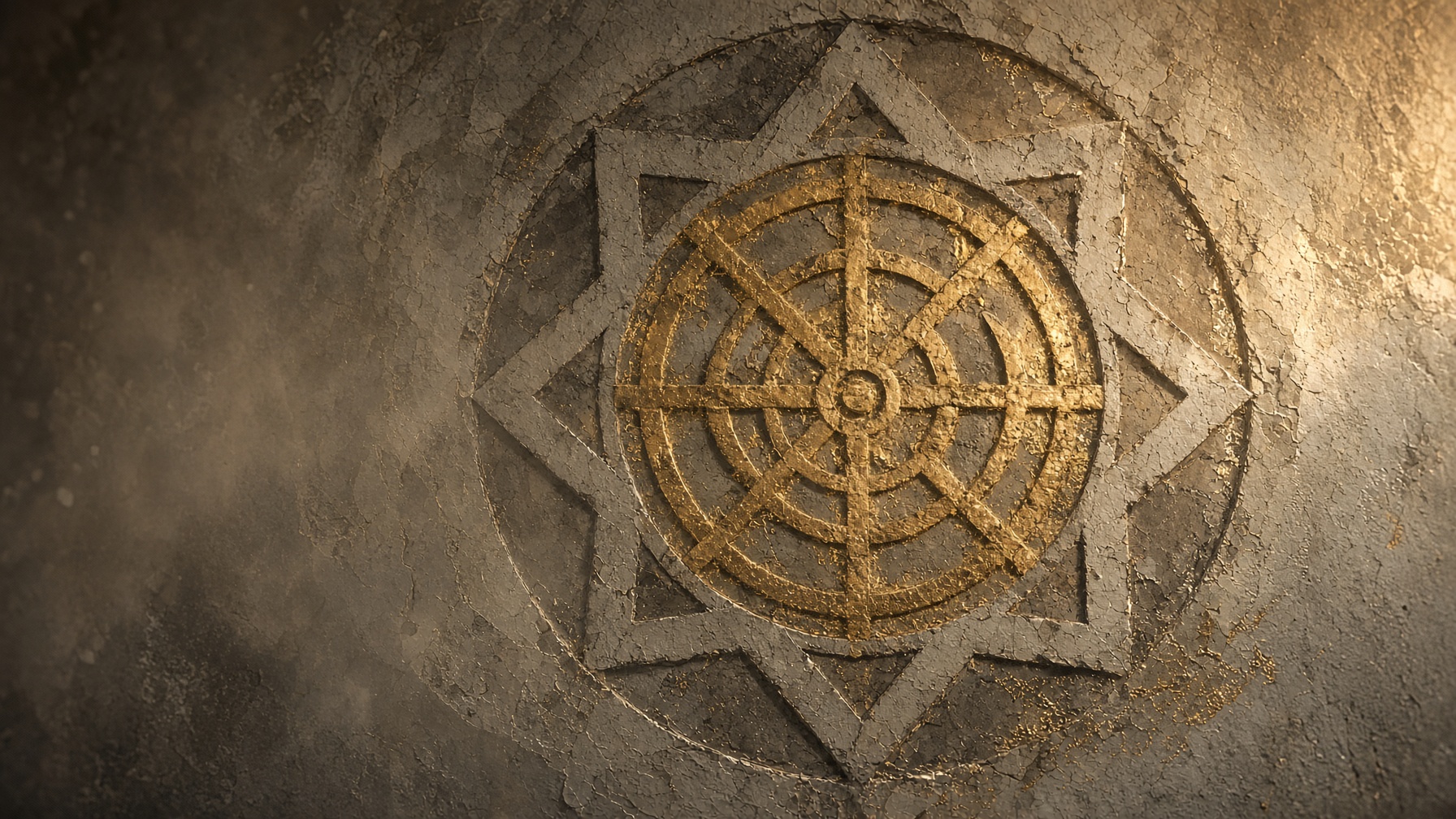
The screening
The picture is filed as The Sign Beneath the Sign.
Scenario
2:57 · 16:9
A mark is painted on a wall at the corner of a lane: a circle broken by a single bar, the sort of sign a traveler trusts. The paint is even. The stone around it is older and darker with weather. A woman with a route card stops in front of it and compares it to the card. They match. She should turn left. The lane to the left is visible, ordinary, a wall and a gutter and a shut gate. She leans closer because the paint is fresher than the stone around it. At the edge of the circle, older pigment shows through, a second mark waiting under the first. She traces the edge with a dry finger and the fresh paint does not come off.
She wets a cloth from a flask of water and works the upper paint at one place only. The water darkens the stone and thins the newer color. She does not flood the mark. The top sign thins. Beneath it, the bar points the other way, and a small notch sits where the newer painter left the circle closed. She stops rubbing. The cloth drips once onto the stone below the signs. She steps back. The route card in her hand now disagrees with the wall's older instruction. Left would take her along the lane she can see. The hidden mark sends her through a narrow arch she had treated as a shadow.
She folds the card and does not follow it. The fold is clean. A corner of the card takes a drop from her wet thumb and the printed left on that corner softens without becoming the other direction. She takes the arch. The passage is short and opens onto a stair the surface sign had argued out of existence. The stair goes down between walls that still hold the day's heat. She does not go down yet. She returns to the wall and looks at both marks together, the new lie and the older direction, neither of them removed. The rubbed place dries at the edges. The older bar is clearer by one more degree where the water worked, and it does not spread past the place she chose.
She does not wet the cloth again. The flask of water stays capped. The drop that already fell dries into a dark spot below the signs and does not run far enough to argue with either bar. Left remains the lane she can see: gutter, shut gate, ordinary wall. The arch remains the narrow shadow the older mark prefers. Her folded card keeps the softened corner and the rest of its printed instruction, and she does not unfold it to make the two agree. The stair's first step holds the day's heat and no footprint. She stands at the corner with both marks in front of her and neither of them scraped away.
The cloth dries on the stone below the signs. Both marks remain, the lower one clearer where she rubbed, and the lane keeps its two possible turns.
Shooting script
Scene 1. Stone wall. Day. 2:57. 16:9.
One place. One hour. It stays one scene.
A woman of thirty-three stops at a lane corner where a circle-and-bar is painted on older stone. Her route card matches the fresh paint, which would send her left. She thins one place with a wet rag and finds an older bar aimed the other way, plus a notch. She folds the card, steps into the narrow arch, and comes back to both marks.
No dialogue.
Breakdown
Day at the stone wall. Build two marks, the wet rag, and the arch.
Cast. One woman, thirty-three, with a route card. No one else.
Wall and marks. A weathered stone wall at a lane corner. A fresh circle-and-bar, paint even. Older pigment under one spot, the bar aimed the opposite way, and a small notch. Both marks stay. The rubbed place can dry from the edges and leave the older bar a degree clearer only there.
Card, rag, flask. A route card that matches the fresh mark, then gets folded. A wet thumb can soften the printed left on one corner. A cloth and a flask of water. She wets the cloth once and leaves the flask capped after. The cloth ends drying on the stone. One drip dries to a dark spot.
Lane and arch. Left: an ordinary lane, wall, gutter, shut gate. The other way: a narrow arch she had taken for shadow, a short passage, and a descending stair whose top tread is still warm from the day and unmarked by any shoe.
Shot list
Camera. One scene. 16:9.
Nobody looks into the lens. The sizes below are the decoupage, not the literary script.
1 · 0:00–0:13 · Wide. At a lane corner a circle-and-bar sits on stone that is older and darker than the paint.
2 · 0:13–0:26 · Close. She holds a route card to the mark, and the two agree.
3 · 0:26–0:39 · Medium. The left-hand lane is plain: a wall, a gutter, a gate that is shut.
4 · 0:39–0:52 · Macro. She leans in, the paint newer than the stone, an older color showing along the circle's rim.
5 · 0:52–1:05 · Close. A dry finger follows that rim, and the fresh paint stays on the wall.
6 · 1:05–1:18 · Medium. A rag wetted from a water flask works one spot only, darkening stone and thinning the upper color.
7 · 1:18–1:31 · Macro. Where the color thins, the lower bar aims opposite, and a notch breaks the closed circle.
8 · 1:31–1:43 · Close. She stops the rubbing, and the rag lets one drip fall on the stone beneath.
9 · 1:43–1:55 · Medium. She steps back, and the card now argues with the older bar.
10 · 1:55–2:07 · Close. The card is folded, and a wet thumb softens the printed left on one corner without making it the other direction.
11 · 2:07–2:19 · Wide. She enters the narrow arch, finds a short passage and a descending stair still warm from the day, and turns back before the first step.
12 · 2:19–2:31 · Medium. Both marks are still on the wall, the rubbed spot drying inward from its edges, the older bar clearer only where the water worked.
13 · 2:31–2:44 · Close. The flask stays capped, the drip dries to a dark spot, and the folded card keeps its softened corner.
14 · 2:44–2:57 · Wide. She remains on the corner, both marks unscraped, the rag drying below them, the lane still holding two turns.
Lookbook
Day on the painted stone.
Full day falls on the corner wall and shows the fresh paint brighter than the weathered stone. Water darkens the stone where she rubs and then dries from the edges, leaving the older bar easier to read only in that spot. The arch stays the darker opening beside the lit lane.
Palette
Weathered stone. #6A635C. The older wall around the mark.
Fresh paint. #E8D7A8. The upper circle-and-bar.
Older pigment. #8C5A3A. The lower bar and the notch.
Route card. #F3E7C8. The card in her hand, one corner softened.
Wet stone. #4E5C68. The darkened patch and the dried drip.
Rag. #D7CBB4. The cloth, then drying on the stone.
Arch. #2E343C. The narrow opening.
Warm stair. #A88462. The first descending step.
Lens
Wide holds the corner, the lane, and the arch as one place. Close holds the woman and the card. Macro holds the two bars, the notch, the drip, and the softened corner.
Costume
Road clothes and a wet thumb.
The woman is thirty-three. The page gives no garment beyond the work of the hands. Dress her in a dust-brown jacket and dark trousers fit for a lane, pockets free for the flask.
The cloth stays dust-brown. Water is on the rag and the thumb, not a change of clothes. The card's corner softens. The jacket stays dry except where a cuff might brush the rag.
Hair is tied back so she can lean to the paint.
Design
One corner, two marks, two turns.
One stone wall at a lane corner in day. The left turn is a visible ordinary lane: wall, gutter, shut gate. The other turn is a narrow arch, a short passage, and a stair going down, first step warm, no footprint.
The wall carries a fresh circle-and-bar over an older mark. A wet rag must thin one spot only, revealing a bar aimed the other way and a notch, then dry at the edges. A drip falls and dries to a dark spot. The flask is capped after the one wetting.
The route card matches the fresh mark, folds clean, and takes a softened printed left from a wet thumb. Both marks remain. She stands at the corner.
Makeup and hair
A dry finger, then a wet thumb.
She is thirty-three. Day on the face, hair tied back, no injury.
One finger traces the paint dry and comes away clean. Later a thumb wets the card's corner. The hands do the reading of the wall.
No paint transfers to the skin. The story sits on the stone and the card, not on the face.
Sound
No score. A wet rag, one drip, footsteps to the arch.
Lane. Day quiet at the corner. No voice.
Finger. A dry trace on the paint. The paint gives no scrape of lifting.
Rag. Cloth and water working one spot. Stone darkens under it.
Drip. One drop off the rag onto the stone, then silence while it dries.
Fold. The card folds clean. A wet thumb softens a corner with almost no sound.
Arch. Footsteps into the short passage and back. The stair is not taken.
After. The flask cap stays shut. Both marks are quiet on the wall.