When the Lights Chose Silence
Key art
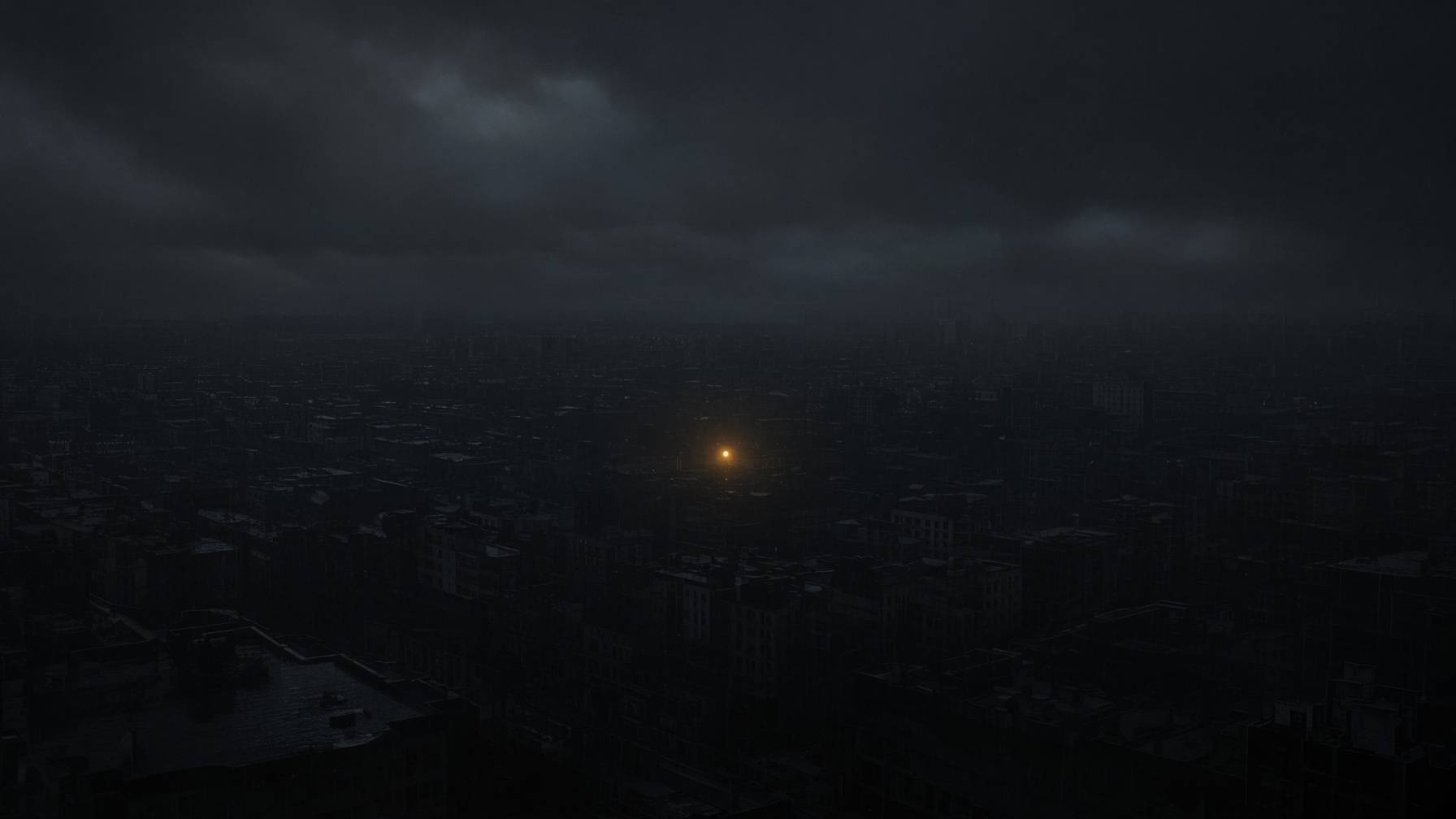
The screening
The picture is filed as When the Lights Chose Silence.
Scenario
2:57 · 16:9
Fluorescent tubes hum over concrete and a long bank of panels. Maris Quen, in a municipal jacket, reads the panels and not the dark beyond the glass. Public lamps are going out in patches, as if a decision had moved through the grid without a vote and without a blow. She does not throw a switch to make a hero of the room. Her hands stay on the log rail. Indicators that were steady go dim in a sequence that is not an alarm. She watches the sequence and does not interrupt it.
Through a high window, windows in the block across the avenue darken floor by floor. A shop sign stutters, tries to keep advertising, and then joins the rest. One letter fights longer than the others and then goes. Night becomes plainer. There is less to sell. The dark is civic, spread over streets, not a single pane sulking in one flat. No crowd gathers. No candles march. The corridor's work light remains, honest and local, while the city lamps decline. The hum of the tubes stays the loudest thing in the corridor.
A panel that had flickered steadies into dead. Maris notes the bay number in a paper log and closes the log. The mast of switches stays where the last shift left it. She does not invent an attack to explain the quiet, and she does not promise the lights a return. A second panel, steady until the log is closed, clicks into dead after she has already shut the book. She does not reopen the log to add it. That second death follows the first and stays unwritten. The shop sign's last letter tries once more in the window and goes dark.
She watches the avenue finish its choice. Signs that competed an hour ago are only metal. The dead panels hold, and the avenue gives nothing back to the signs. The fluorescent tubes keep humming over a corridor that still has its own small light. Maris's hands stay on the closed log. The switches stay where they were left. Outside, the block finishes its darkening, and no vote appears on the glass to reverse it.
Maris does not walk the mast of switches to undo what the last shift left. The closed log stays closed on the one bay number she allowed herself to write. The second dead panel stays dead without a line of its own. Fluorescent tubes hum and light only the corridor, an honest local fact, while the avenue outside keeps the larger dark. Metal signs do not flicker back into advertising. The block across the way does not relight a floor it has already given up. No crowd arrives to disagree. No small flames are carried along the pavement. Her municipal jacket does not become a signal. The concrete stays concrete. The decision that moved through the grid stays moved, and her hands stay on the log rail as the plain night finishes settling over the signs.
Shooting script
Scene 1. Substation corridor. Night. 2:57. 16:9.
One place. One hour. It stays one scene.
Maris Quen, 39, in a municipal jacket, logs one bay as public lamps die in sequence, and a second panel goes dead after the log is shut.
No dialogue.
Breakdown
Night hour for panels, a paper log, and an avenue going dark.
Cast. Maris Quen, 39, alone in the corridor. No crowd, no candles.
Panels. Long bank, indicators that dim in a quiet sequence, one panel settling dead, a second clicking dead after the log is closed.
Switches. Mast of switches left where the last shift left it, untouched by her.
Log. Paper log and log rail. She writes one bay number and closes the book. The second dead panel stays unwritten.
Tubes. Fluorescent tubes that hum and keep the corridor's own small light.
Window. High window onto the avenue, block windows darkening floor by floor, a shop sign that stutters and then goes, last letter trying once more.
Shot list
Camera. One scene. 16:9.
Nobody looks into the lens. The sizes below are the decoupage, not the literary script.
1 · 0:00–0:11 · Wide. Tube light hums along a concrete corridor lined with a bank of panels.
2 · 0:11–0:23 · Medium. Maris, municipal jacket on, reads the panels with both hands on the log rail.
3 · 0:23–0:35 · Close. Steady indicators dim in an order that never becomes an alarm, and she only watches.
4 · 0:35–0:47 · Wide. Through a high window the block across the avenue darkens, floor after floor.
5 · 0:47–0:59 · Medium. A shop sign stutters, one letter holding longer than the rest, then joins the dark.
6 · 0:59–1:11 · Wide. The corridor keeps its own work light while the city lamps decline.
7 · 1:11–1:23 · Close. A panel that had flickered settles into dead.
8 · 1:23–1:35 · Medium. She enters that bay number on the paper log and shuts the cover.
9 · 1:35–1:47 · Wide. The mast of switches remains where the previous shift left it.
10 · 1:47–1:59 · Close. A second panel, steady until the book shut, clicks into dead.
11 · 1:59–2:11 · Medium. In the window the sign's last letter tries once more and goes.
12 · 2:11–2:23 · Wide. Signs that competed earlier are only metal now.
13 · 2:23–2:35 · Medium. Her hands stay on the closed log.
14 · 2:35–2:47 · Wide. The block beyond the glass finishes going dark.
15 · 2:47–2:57 · Medium. The tubes keep humming over the corridor's small honest light.
Lookbook
Local tubes, avenue going dark
Night outside is a decision moving through the public lamps. Inside, fluorescent tubes hold an honest local light on concrete, panels, and the paper log. Indicators go from steady to dim to dead and turn matte. Through the high window the block loses its windows floor by floor, and the shop sign ends as bare metal in a plainer dark.
Palette
Tube light. #E4F0E6. Fluorescent wash on the corridor
Concrete. #A7A59E. Corridor walls and floor
Dead panel. #2E3438. Indicators gone matte
Municipal jacket. #1E4D6E. Maris's work jacket
Log paper. #F3EAD7. Paper log with one bay number
Avenue night. #12161C. Dark beyond the glass
Sign metal. #8B9096. Shop sign after the letters die
Switch mast. #4A5560. Switches left by the last shift
Lens
A wide holds the corridor, the panel bank, and the high window in one civic room. A close holds the dimming indicators, the bay number, and her hands on the log rail. The avenue is only what that window can hold. No street crowd is staged below.
Costume
A municipal jacket, still only a jacket
Maris Quen is 39. She wears a municipal jacket, dark blue, over plain work clothes. The jacket stays a work jacket. It never becomes a signal while the city lamps die.
Hands stay on the log rail and then on the closed log. She walks no switch mast and adds no reflective sash, no armband, no lamp of her own. The cloth is the same at the last dark window as at the first dim indicator.
Design
Panels, log, and a dark avenue
A concrete corridor, fluorescent tubes that stay on, a long panel bank, and a mast of switches frozen where the last shift left them. Indicators must be able to dim in sequence without an alarm, one panel settling dead, and a second clicking dead after the log is shut.
A paper log takes one bay number and then stays closed, the second death unwritten. A high window shows a block going dark floor by floor and a shop sign that stutters, loses a last letter, and becomes metal. No crowd, no candles, no vote on the glass.
Makeup and hair
Hands on the log rail
Maris is 39. Hair practical, off the face, skin even under the tubes, no heroic grime. The face watches and stays unannouncing.
Hands rest on the log rail, write one bay, and return to the closed book. Nails short, clean. Tube light cools the skin slightly and leaves no mark. Nothing is carried in the hands but the log.
Sound
No score. Tube hum, a panel click, and a dying sign.
Tube hum. The loudest thing in the corridor, steady while the city lamps decline.
Dim sequence. Indicators fading with no alarm tone.
First dead panel. A flicker settling into silence.
Log. Paper and a closing cover after one bay number.
Second click. A panel clicking dead after the book is already shut.
Shop sign. A stutter outside, one letter fighting, a last try, then nothing.
Avenue. The larger dark finishing with no crowd noise under the window.